
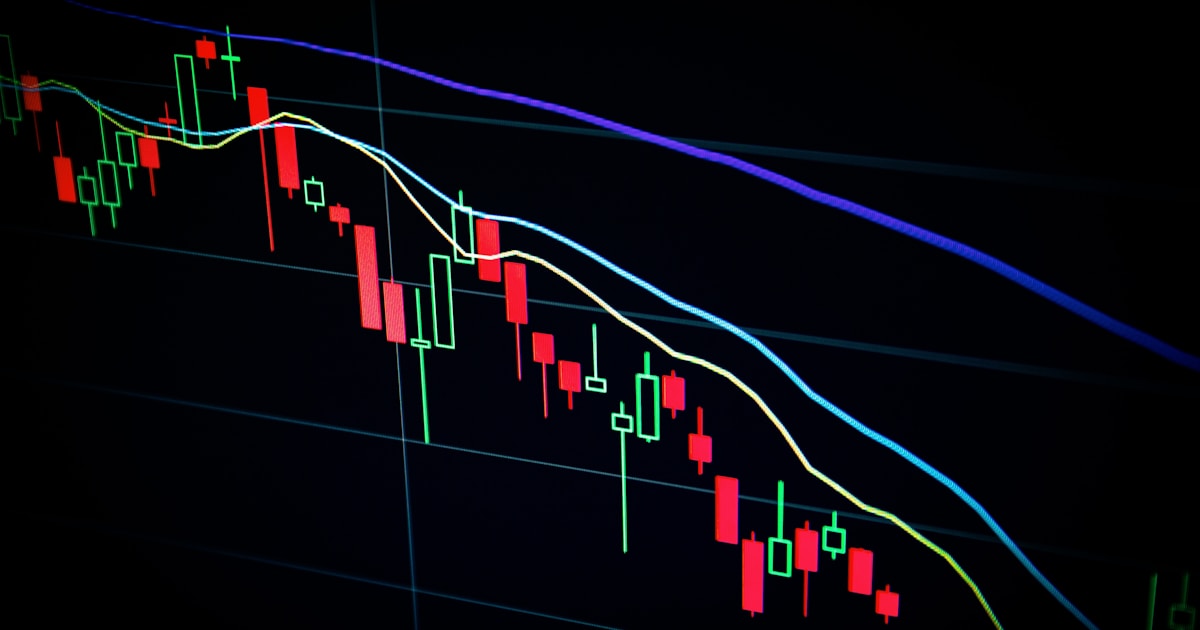
Bitcoin at $65K: Why Crypto Is Defying the Market Sell-Off
As of July 2026, global financial markets are navigating a period of sharp recalibration, particularly within the technology sector. Yet, amid this broader market turbulence, the asset class remains anchored by a surprising level of Bitcoin price resilience. Trading consistently around the $65,000 support level, Bitcoin has decoupled from the high-beta tech stocks that traditionally move in lockstep with the crypto market. For institutional and sophisticated retail investors, this stability is not merely a statistical anomaly; it represents a fundamental shift in how digital assets are integrated into modern portfolios.
Structural Shifts and Institutional Adoption
The current market environment is defined by a flight to quality. While traditional equities are reacting to mid-cycle fiscal tightening and tempered growth projections, Bitcoin has matured into an asset with a more defined buyer base.
The Institutional Floor
The approval and subsequent institutionalization of spot Bitcoin ETFs have fundamentally altered the asset's supply-demand dynamics. Unlike the speculative retail-driven cycles of 2021, the current market is supported by systemic accumulation from pension funds, wealth management platforms, and corporate treasuries. These entities often view Bitcoin through the lens of a long-term duration asset rather than a day-trading vehicle. Consequently, when equity markets sell off, these institutional holders are less likely to liquidate their positions; they are effectively providing the “buy-side” pressure required to defend the $65,000 level.
Liquidity and Market Maturation
We are also observing a transition in how digital asset liquidity is managed. With the proliferation of regulated derivatives markets and custodial solutions, the “flash crash” sensitivity that once plagued Bitcoin has been mitigated. Large-scale capital is now flowing through deep, institutional-grade order books, which creates a more robust buffer against the panic selling that often triggers cascading liquidations in less mature markets.
Evaluating Bitcoin Price Resilience in a Portfolio Context
Investors asking why Bitcoin is holding steady must look at the macro-correlation metrics. In previous cycles, Bitcoin’s correlation to the S&P 500 hovered near 0.8 or higher. In recent months, that correlation has compressed significantly, sometimes dipping toward zero or even turning negative during liquidity shocks.
The Hedge Debate
Is Bitcoin acting as a hedge? The evidence remains nuanced. Rather than acting as a traditional "safe haven" like gold, Bitcoin is currently functioning as an alternative "risk-off" asset for investors who have lost confidence in the volatility of the tech-heavy Nasdaq. This is a crucial distinction. It is not that Bitcoin is inherently risk-free; rather, it is becoming a preferred alternative to the over-leveraged tech positions that defined the previous bull cycle.
Actionable Strategies for the Current Environment
For investors navigating this period, the key is to avoid the trap of mistaking stability for stagnant growth. Here is how to approach the current $65,000 environment:
- Rebalance, Don’t Panic: If your digital asset allocation has drifted due to the recent relative stability of Bitcoin compared to your other holdings, execute a disciplined rebalancing. The goal is to return to your risk tolerance, not to bet on short-term price movements.
- Monitor Basis Spreads: Institutional players are watching the futures basis (the difference between spot price and futures contracts). When the basis stays narrow while the spot price holds $65,000, it suggests organic demand rather than speculative over-leverage.
- Stress-Test Your Time Horizon: Given the current market decoupling, ensure your crypto exposure matches your long-term capital requirement. If you are using Bitcoin as a hedge, ensure your position sizing is sufficient to provide a meaningful offset to your equity drawdowns without exceeding your risk mandate.
- Watch the On-Chain Flow: Use exchange balance data to monitor for sudden spikes in outflows to cold storage. Consistent outflow from exchanges at the $65,000 level is a strong indicator of long-term conviction among whales, signaling that the current price level is viewed as a high-value entry point.
Key Takeaways
- Institutional Anchoring: The Bitcoin price resilience seen today is largely the result of long-term institutional accumulation, which acts as a stabilizer against short-term market volatility.
- Decoupling from Tech: Bitcoin is increasingly moving independently of the tech-heavy indices, establishing itself as a distinct asset class rather than just another proxy for growth tech.
- A Shift in Market Quality: The current $65,000 floor is supported by structural changes, including improved liquidity, regulated derivatives, and a transition toward "hold-to-maturity" investment behavior.
- Strategic Discipline: Investors should focus on disciplined rebalancing and monitoring on-chain data to confirm that current price stability is backed by genuine long-term capital interest rather than temporary market conditions.
Ready to Analyze Your Next Investment?
Get a free AI-powered fair value analysis on any stock. See intrinsic value, margin of safety, and institutional-grade risk metrics in seconds. No credit card required.
Want full access to our institutional research tools? Explore Invest Daily Pro.
You're learning how to value stocks. Now apply it to any ticker in seconds.
Enter any ticker and our engine runs a DCF model, compares P/E to industry medians, and gives you an intrinsic value range with a margin of safety estimate.
Get This Analysis in Your Inbox Every Morning
Join 12,500+ investors who receive our daily market briefing with institutional-grade analysis, key developments, and actionable strategy - delivered before the opening bell.
Essential Reading: Top Investor Guides
Our most comprehensive guides - start here to build a complete investing foundation.
Market Basics
Stock Market Fundamentals: How Markets Work, Reading Charts, and Technical Analysis
Portfolio Strategy
Portfolio Management Masterclass: Asset Allocation, Diversification, and Rebalancing
Retirement
The Complete Retirement Planning Guide: 401(k), IRA, Roth, and FIRE Strategy
Dividend Income
The Ultimate Guide to Dividend Investing: How to Build a Safe Income Portfolio
Valuation
The Complete Guide to Stock Valuation: How to Calculate Intrinsic Value
Financial Statements
How to Read a Balance Sheet Like a Professional Analyst
Monetary Policy
Understanding the Federal Reserve: How Monetary Policy Actually Works
Real Estate
Real Estate Investment Trusts (REITs): A Complete Investor's Guide
Options & Hedging
Options Basics: How to Use Derivatives to Protect Your Portfolio
Investor Psychology