
I turned $7,000 into $1.2 million.
Then I lost nearly all of it in one day.
My name is Drew Stegman. I am 30 years old, born and raised in Belleville, Illinois. This is the true story of how I rode the 2021 penny stock mania to over a million dollars, watched most of it vanish on a single morning, and then built Invest Daily so fewer people have to learn these lessons the way I did.
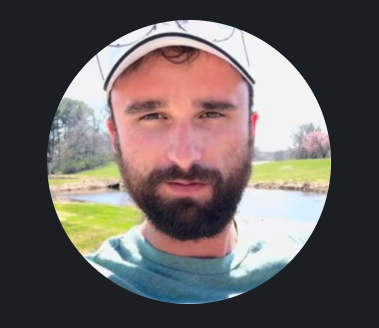
Drew Stegman
Founder, Invest Daily
I grew up in Belleville, Illinois, the son of a small town attorney who taught me the value of honest work.
My dad was an attorney, and he was always able to work just one job. We did not do anything crazy. We lived in a three bedroom ranch with a finished basement, a pool table, and even a pinball machine, which was awesome. Some of my friends had parents who both worked two jobs. My mom did not have to, and I noticed that, even if I did not fully understand it yet.
Growing up, I loved yard jobs and anything where I could get paid for the work of my hands. I would go out into the neighborhood, earn a little money, and then blow it on something stupid the same evening. We raised hell through elementary school. By middle school I started caring about how money actually worked. I watched Pawn Stars and learned from Rick, Chumlee, and the Old Man. That show planted a seed.
Around the same time I found a childlike faith in Jesus Christ and the belief that He died for my sins. People think you have to be good to get to heaven. That is not the answer. This is the answer, and it is a core belief of mine. It carried me forward then, and it carries me now.
By high school the drive had intensified. I started my first business, how2gainmusclefast.com, and my first YouTube channel when I was about 16. I remember checking my phone on the way to my dishwashing shift at the local Chuck Wagon and seeing I had made $200 in affiliate commissions. It was the best feeling in the world at that age.
That business is long gone. I gave up on it and tried dropshipping and everything else under the sun. People told me I was stupid and that I was doing all of it for nothing. But I always had the entrepreneurial drive. I always wanted to build and create and work on something I felt passionate about. That part never left me.
When I turned 19, I started messing around in the stock market. No mentor. No roadmap. Just a deep, almost obsessive curiosity about how money worked. One of my first penny stocks was Mondial Ventures at $0.0001, one hundredth of a penny, supposedly an oil and gas company on the cutting edge of something or another. You can guess how it ended.
Then came THCZ, and I have to give credit to my friend Justin. We actually made some money on that one. Then I did something stupid. We could have bought another 20 million shares and become millionaires, technically, with leverage. I dumped all the profits back in. It was a bad decision, the kind you make when you are young and the market feels like a lottery ticket.
That mentality carried into my early twenties, and into my marriage to my wife Rachel. Neither of us were really ready. By 23 I had a daughter on the way, then two sons after that. Life and markets were both moving faster than I could process.
Around that time the market did something that felt like it only happens once in a hundred years. It tanked, and then it rebounded like there was no tomorrow. I remember sitting at home watching it happen. The market went down, and then it went straight up. They pumped roughly $5 trillion into the economy. The people who saw the writing on the wall positioned themselves into riskier bets because they knew retail money would pour into speculative assets. I was not one of those calculated people. I just found my way back into the penny stock market after I had told myself I would never do it again.
I studied corporate finance and investments for my undergraduate degree, then went on to get an MBA. It was a cheap one, not from a fancy school. I worked with a guy who spent a quarter million on his. Mine cost about $5,000. I also spent a couple of years working inside financial services, in wealth management, at Charles Schwab. I thought I was building toward something. In some ways I was. Just not the way I expected. The real education happened in the markets, and it cost me more than I ever imagined.
Background
From $45,000 to $1.2 million. I thought I had figured something out.
Here is the meat of the story. Everything I am about to tell you is 100% true. It has been more than five years, and I have a private library of videos I saved to back it all up. I am not telling you this to brag. I am telling you because it is the only way the rest of this makes sense.
I started with roughly $6,000 to $7,000, a mix of excess emergency fund savings and the portion of a stimulus check my ex wife let me keep. This was between December 2020 and the start of the new year. After a few rapid, successful trades, I ended up with the snapshot below, taken around early March 2021.
The entire market was unlike anything I had ever seen, or that most people had ever seen. Small cap and OTC names were exploding by hundreds of percent in days. Retail was moving markets. It was chaotic, electric, and for a brief window, extraordinarily profitable if you were positioned right. I was positioned right.
I had put about $100,000 into a tiny OTC stock called GOFF, Goff Corp. My cost basis was about $0.07, and I held over a million shares across multiple accounts. I was running a finance YouTube channel at the time, sharing what I was seeing in real time, and the portfolio was growing fast.
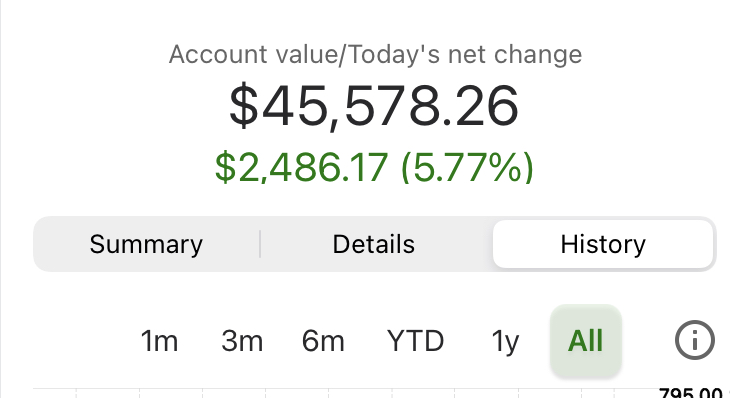
This is where it started. A screenshot I will never forget. My account sitting at $45,578, up 5.77% on the day, with GOFF just beginning to make its move. I had started with less than $10,000. Seeing that number felt like proof I had figured it out.
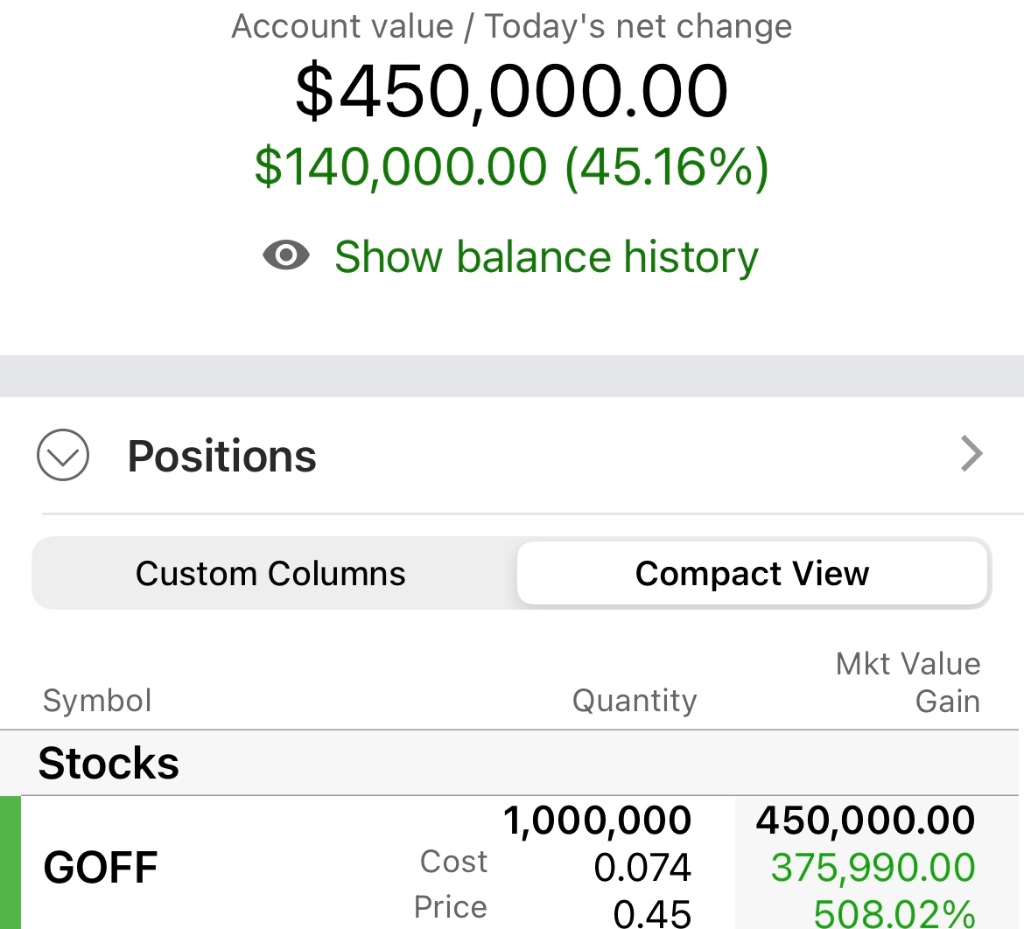
Then GOFF started running, hard. I watched it go from fractions of a cent to 2,419% year to date. My TD Ameritrade account with 1,000,000 shares at a cost basis of $0.074 hit $450,000, up 508%, in a single account. My Charles Schwab PCRA Trust account with 540,000 shares was showing $248,837, a gain of +550%. My combined balances had crossed $107,937 in a single Fidelity account alone, up 24.91% in one day.
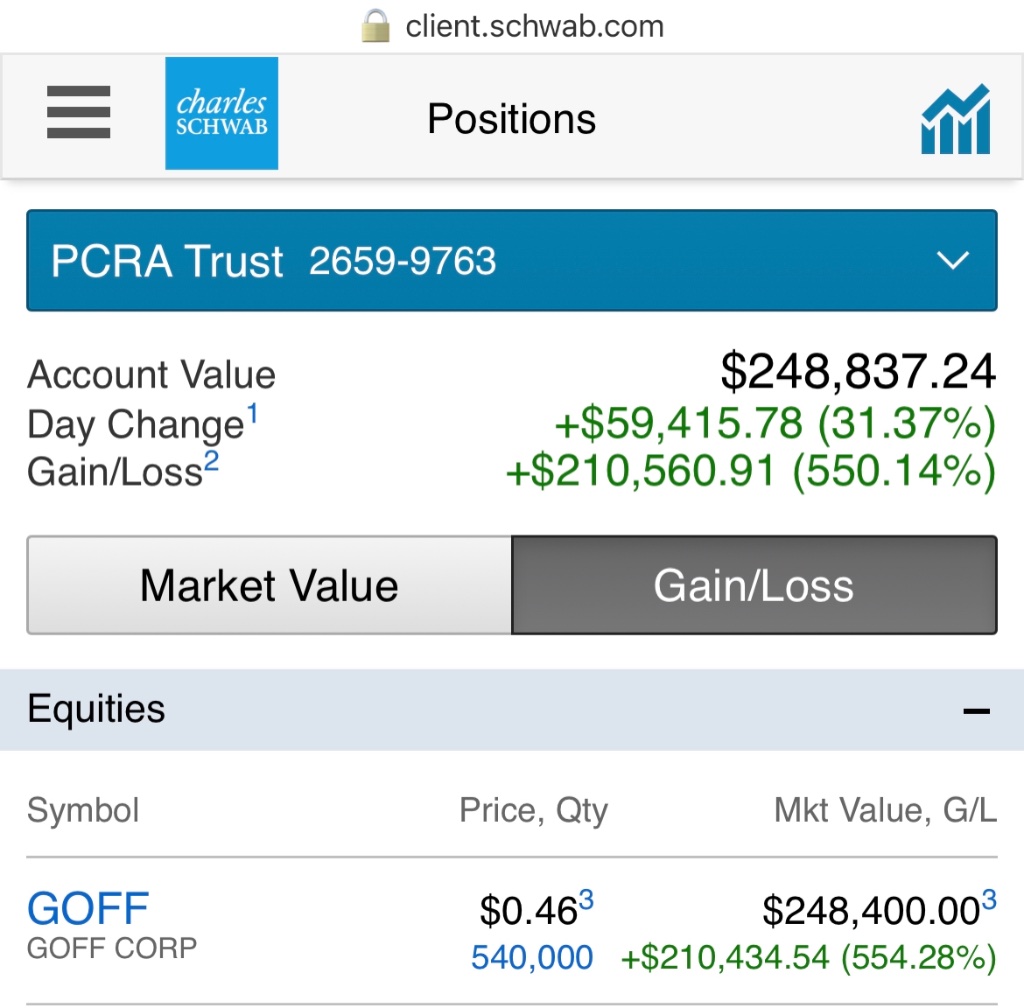
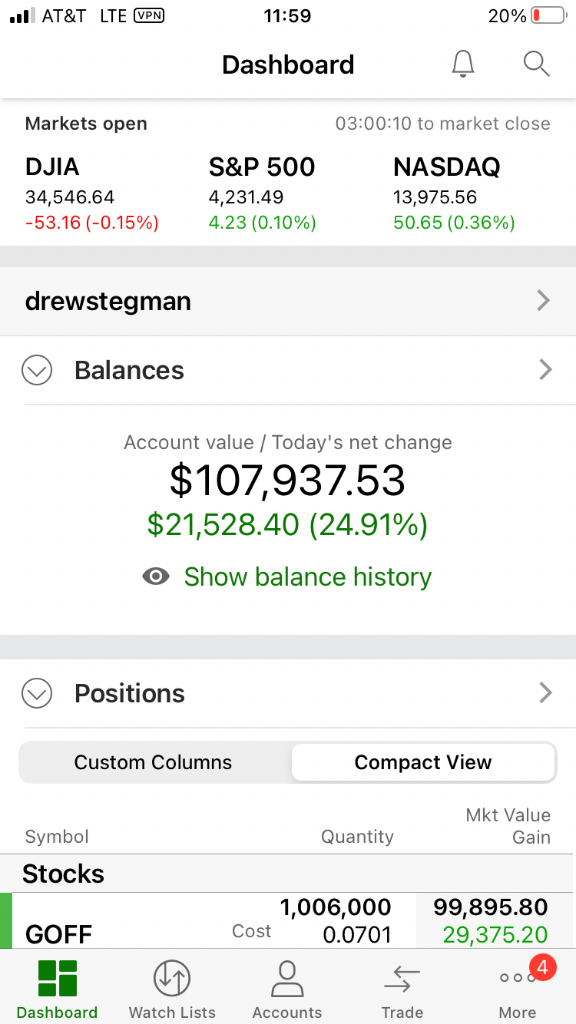
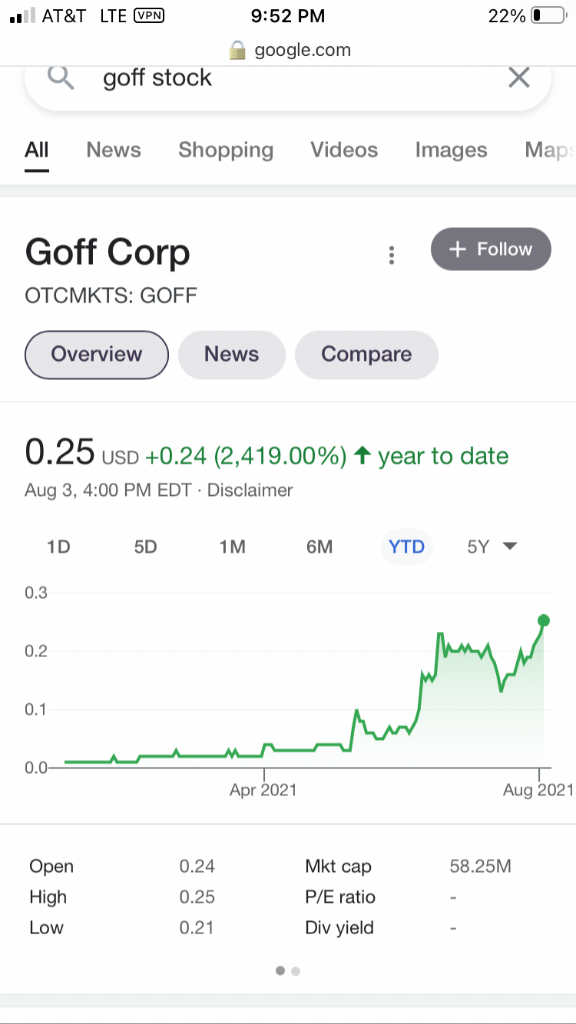
In that market, it was easy to go into a stock at one cent per share and sell it at ten cents the next week. I did that three times in a row. When you see a market like that, sometimes you just have to jump in and play around if you are comfortable taking the risk. My worst case was losing $7,000. My best case was making a bunch of money. I made a bunch of money.
Then came the rebrand. GOFF became WNFT, Worldwide NFT, Inc., complete with a 3 for 1 stock split, a new ticker, and the promise of a pending merger. The narrative was shifting. The hype was real. NFTs were everywhere in 2021 and this stock had every ingredient retail investors were chasing. I was deep in. Basically all in.
I was running a Discord chat at the time and I was one of the main participants. Because of that, I could not in good faith dump a large position on people, especially in thinly traded OTC stocks where one big sell can disrupt the market. So I held. I was also holding for the merger. That is the part that hurts to look back on, because it sounded so reasonable at the time.
Then my combined portfolio across all accounts hit the number I still think about: $1,216,233.
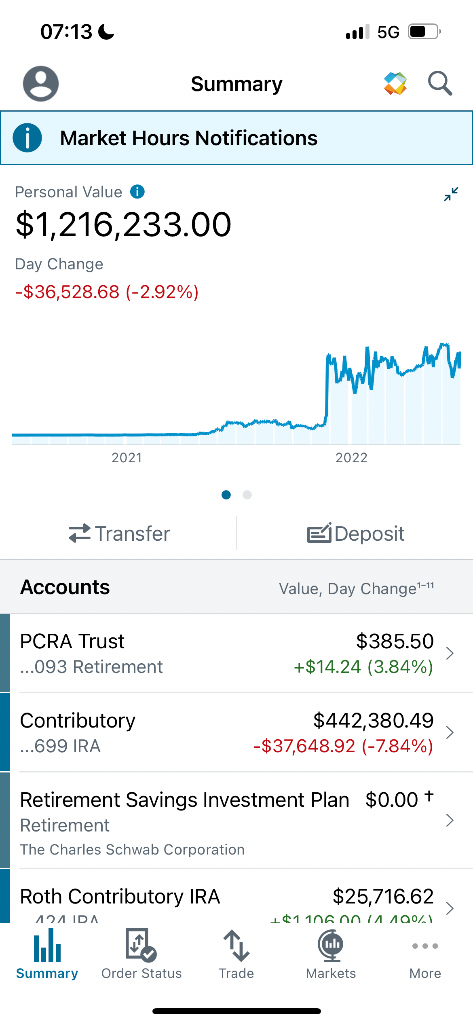
I had planned to liquidate at around $2 million. I peaked off technically at $1.6 million and kept telling myself the story was still intact. I was 25 years old with a million dollar portfolio, and I genuinely believed I had earned it. On the way to West Virginia with my family, my ex wife and I talked about whether I should sell. She told me to wait for $5 a share.
That is the most dangerous place an investor can be. I had not figured anything out. I had been in the right place at the right time, in one of the most euphoric speculative markets in a generation. And I was about to find out what that actually meant.
One press release. One morning. $455,274 gone in a single trading day.
By July 2022 we had reached peak mania. WNFT, formerly GOFF, had been slowly grinding lower as the merger narrative stalled after the 3 for 1 forward split. I had stayed in. I kept telling myself the story was still intact, the catalyst was still coming, the thesis was just taking a few days longer than expected to play out.
That is what hope looks like when it is masquerading as strategy. You do not recognize it in the moment. You convince yourself you are being patient, not stubborn. You tell yourself you are a long term investor, not someone who cannot accept that the deal might not go through.
Then came the morning of July 8, 2022. At 9:00 a.m. Eastern, Globe Newswire pushed a headline I will never forget: Worldwide NFT, Inc. Provides Shareholder Update.
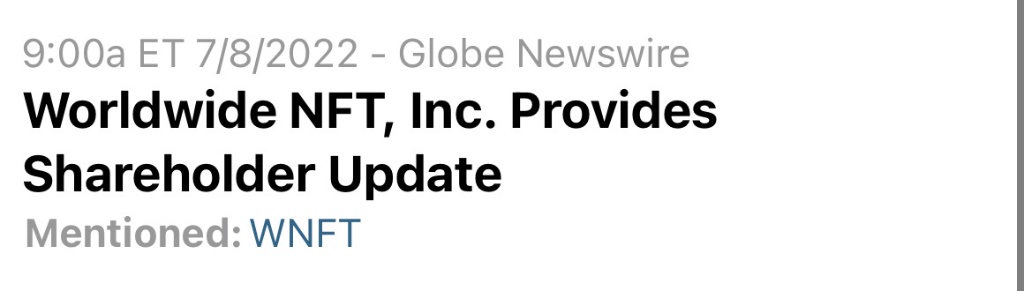
I remember exactly where I was when I saw that notification. A shareholder update sounds innocuous. It is not always a bad thing. But something in my gut knew the second I woke up and read it. The floor dropped out.
The update was not the catalyst the bulls had been waiting for. It was the opposite. The market responded immediately and brutally. WNFT collapsed. Because I was essentially all in across multiple accounts, after holding through months of prior deterioration, the damage was catastrophic.
My TD Ameritrade combined account balance, which had been over $600,000 just a week earlier, closed the day at $238,329.47. That is down $455,274.42 in a single trading session. A 65.64% loss in one day.
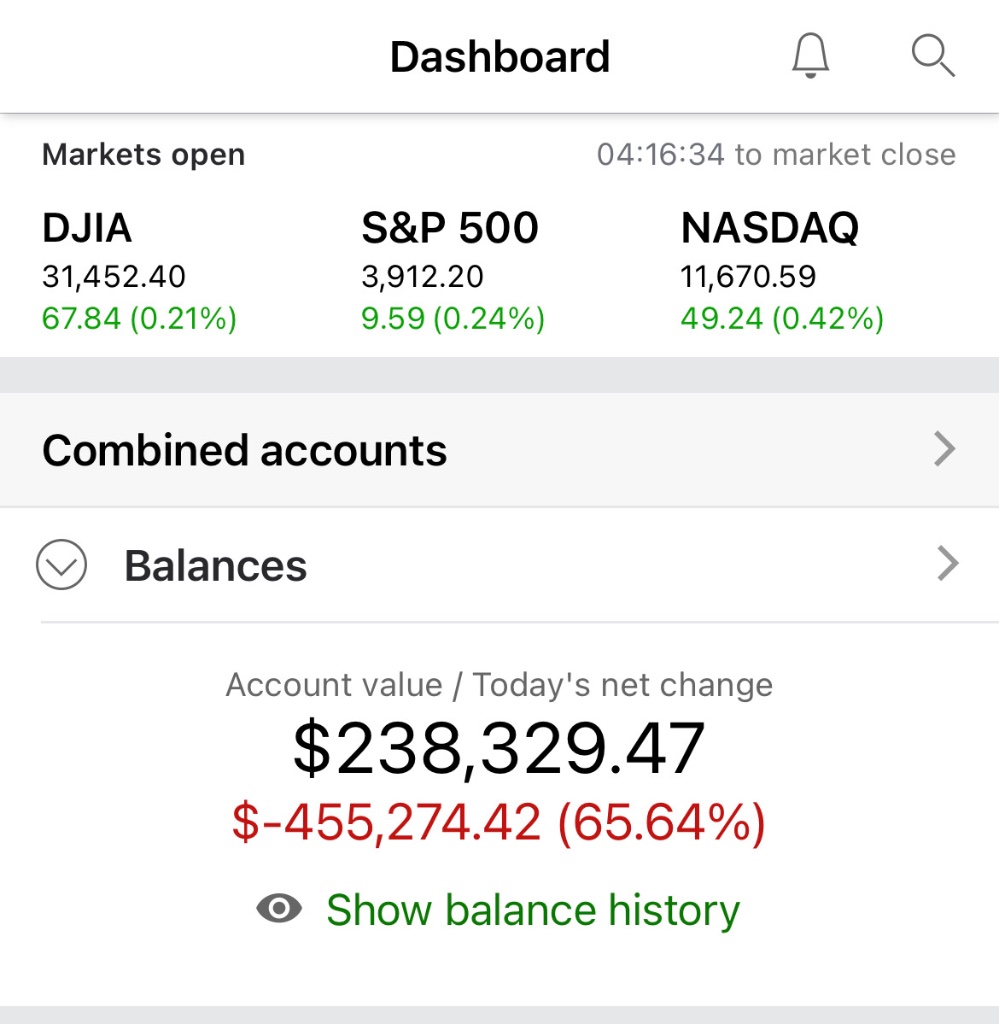
The stock itself went down 76%. I did have other stocks in the account, so I was able to get some passengers off the lifeboat, as I put it. But not many. Not nearly as many as could have made it. From the peak, I had effectively lost about 80%. Nearly a million dollars, gone.
I remember sitting there after the market closed, just staring at the screen. There is a specific kind of silence that follows a loss like that. Not peaceful. Not quiet. Just empty. Your brain cannot really process the number. It is too big. So you sit there, and you feel nothing and everything at the same time.
I did not handle it perfectly. I do not think anyone could. The loss itself was not even the hardest part. The hardest part was looking in the mirror and understanding my own role in what happened. Not just the position sizing. Not just the concentration risk. The emotional decisions. The hope I let drive the bus. The moments I knew I should trim, and I did not.
Fear and greed are not abstract concepts. I have felt both of them, physically, in ways no textbook or classroom could ever teach. I know what it feels like to hold a losing position too long because you cannot emotionally accept that you were wrong. I know what it feels like to let hope masquerade as strategy. And I know exactly what it costs.
I should add one thing. I made six figures two years in a row, and because most of those gains were short term capital gains, the tax bill was brutal. It took me years to finally pay down the federal debt from it. So the pain was not just one day. It was 12 months of paradise, and then 48 to 60 months of hell. And honestly, it is still ongoing. They still have not gotten a deal done.
My son was diagnosed with leukemia. Then I lost my career.
The portfolio was already decimated. I was trying to find my footing. Then I got the news that my son had been diagnosed with leukemia.
If you have ever sat in a hospital with your child, if you have ever watched a little face look up at you trusting that you will make everything okay while you silently carry the weight of not knowing if you can, then you understand why financial loss becomes very small, very fast. And the pressures of life do not pause for grief. Bills do not stop. Obligations do not disappear.
I want to say this plainly. My son is fully recovered, thank God. He is doing extremely well and he is in school. I thank God for that every single day. But going through it changed me.
Around the same time, my career in financial services came to an abrupt and involuntary end. I was approached in connection with a FINRA regulatory inquiry related to my YouTube channel. I was asked to participate in a testimony process. I refused. Not because I had done anything I was ashamed of, but because of my principles, and because I was not willing to let external pressure dictate what I said or did not say. The cost of that decision was my career.
I do not regret it. I believe it was the right thing to do. But I would be lying if I pretended it did not hurt. Losing a career, losing a portfolio, watching your child fight for his health, all of it layered on top of each other, will test you in ways I genuinely hope most people never have to experience.
Those experiences taught me something I carry every day. The only thing you truly control is how you respond. Not to the market. Not to life. Not to the things that blindside you at your most vulnerable. Just your response.
The lessons I paid the highest price to learn.
These are not lessons from a book. They came from real losses, real pain, and real moments of reckoning with my own psychology.
Greed is invisible until it is too late.
When you are winning, it does not feel like greed. It feels like confidence, like skill, like momentum. The market of 2021 taught me that the environment can manufacture that feeling. When the environment changes, the feeling evaporates instantly. I learned to ask, every single time: is this analysis, or is this emotion?
Fear will cost you more than any single bad trade.
Holding a losing position because you cannot emotionally accept the loss. Panic selling at the bottom because the pain becomes unbearable. Refusing to re enter because the trauma of the drawdown is still too fresh. I have done all of these things, and they all come from one root: letting fear make decisions instead of process.
Patience is the rarest and most valuable edge in investing.
The investors who come out ahead over decades are not always the smartest in the room. They are almost always the most patient. I learned the hard way that waiting for genuine setups, holding through noise without reacting, and thinking in years rather than days is not passivity. It is discipline. And discipline is everything.
Being contrarian is not about being different. It is about being right when everyone else is not.
The herd moves fast in speculative markets. Following the herd in 2021 produced enormous short term returns for a lot of people, until it did not. The willingness to stand apart from consensus, to question the narrative, to ask what everyone is missing, that is a skill I had to develop through loss, not through success.
Process is the only thing that holds up under pressure.
When everything is going wrong, when the portfolio is bleeding, when life is hitting you from every angle, when the emotional pressure is at its peak, the only thing that keeps you grounded is a framework. Not a tip. Not a prediction. A process. A set of principles you decided in advance to hold to, regardless of how you feel in the moment.
I am 30 years old. I am out of the industry. And I have never been more sure of what I am building.
Starting over is humbling. I mean that in the most literal sense. It strips away everything you thought you knew about yourself and forces you to reckon with what is actually true. I lost a portfolio. I lost a career. My family faced a medical crisis no parent is ever prepared for. Somewhere in the middle of all of it, I had to decide who I was going to be on the other side.
I chose to build. Not out of arrogance. I have earned enough humility to last a lifetime. I chose to build because I believe everything I went through gave me something rare: a first hand understanding of what individual investors actually face when they are in the middle of fear, uncertainty, and high stakes decisions. And an understanding of what would have actually helped.
The tools professional investors use every day, scenario analysis, valuation frameworks, behavioral guardrails, structured decision processes, none of those were accessible to me when I needed them most. Not at a price point that made sense. Not in a format that spoke to how individuals actually invest. And not without a conflict of interest built into the model.
So I built Invest Daily to be all of those things. Not the platform I thought would make me money. The platform I genuinely wish had existed when I was sitting in front of a screen watching my portfolio fall apart in real time.
That is the entire motivation. There is no other agenda. I am sharing my story because I think honesty is worth more than a polished brand image, and because the people who will benefit most from this platform deserve to know exactly who built it and why.
I built the platform I wish had existed.
Invest Daily is not a signal service. It is not a tips newsletter. It is not a trading platform. It is a structured thinking environment, built on the belief that better process produces better outcomes over time. Process beats reaction. Frameworks beat emotion. Clarity beats noise.
Every tool on this platform reflects what I learned the hard way, through real losses, real pain, and a genuine commitment to understanding what actually works in investing over the long term. Not what works in a bull market. Not what works when everything is going up. What works when it is hard. When you are scared. When the data says one thing and your emotions say another.
The investors who have found their way into this community are here because they are serious. They are not looking for hype. They want tools that help them think more clearly, and a community of people trying to do the same thing. That is what I am building every single day.
If you have read this far, thank you. Truly. I do not take that lightly. You are in the right place.
Drew Stegman, Founder
Join a community of serious investors.
Explore the full platform. See exactly what is included. And make an informed decision, the same way you should make every investment decision.
30-Day Money-Back Guarantee. Cancel Anytime. No Conflicts of Interest.
Keep Reading
Value any stock with 5 models
Fair value, risks, earnings red flags, and an AI analyst. $70/year.
2027 Tax Strategy for Investors: The Complete Legal Tax-Reduction Playbook
Read article options tradingOptions Trading for Beginners: Calls, Puts, and the Greeks Explained
Read article behavioral financeThe Psychology of Money: 8 Mental Biases That Destroy Investment Returns
Read article options tradingOptions Basics: How to Use Derivatives to Protect Your Portfolio Without Gambling
Read articleKnow what a stock is worth before you buy it.
Five valuation models, an AI research analyst, and an all-account wealth dashboard. $70 a year — a fraction of one research subscription.
