
The Diversification Illusion: Are Your Index Funds Truly Safe?
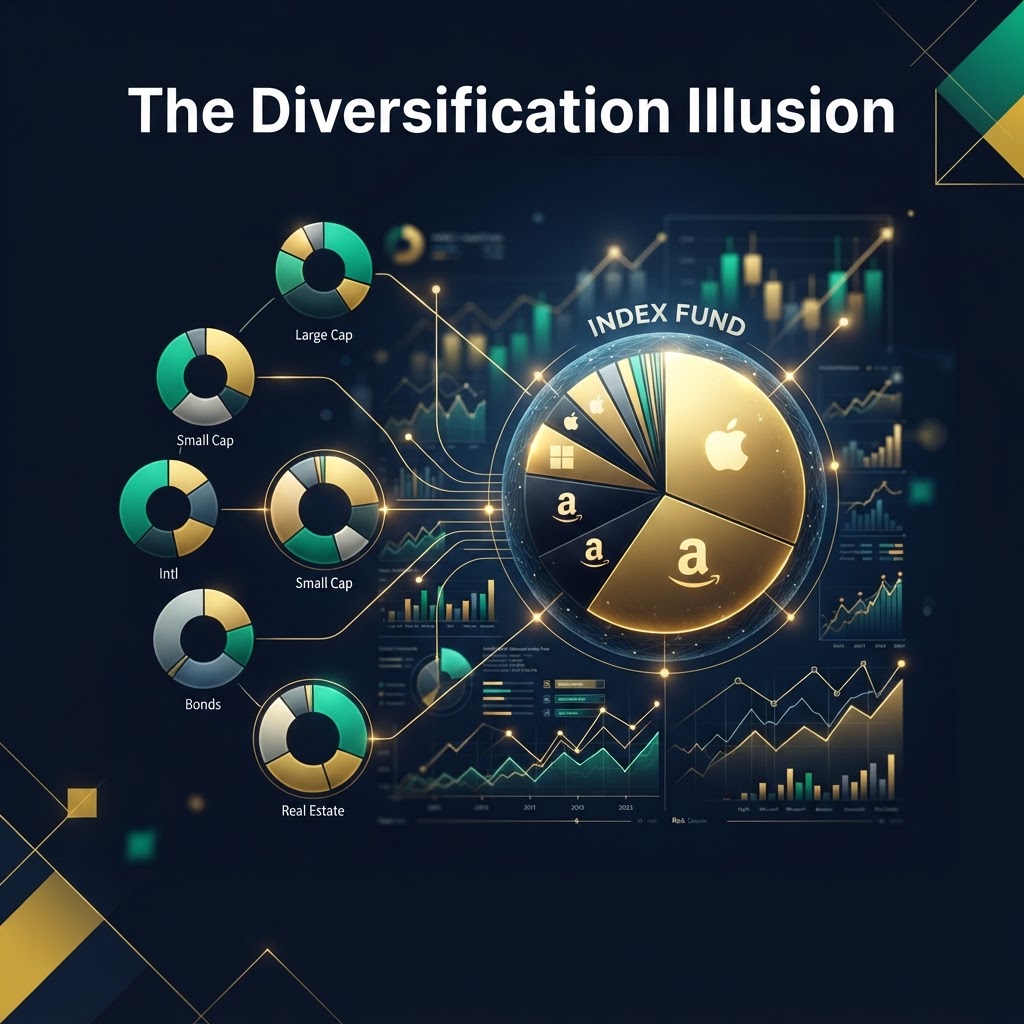
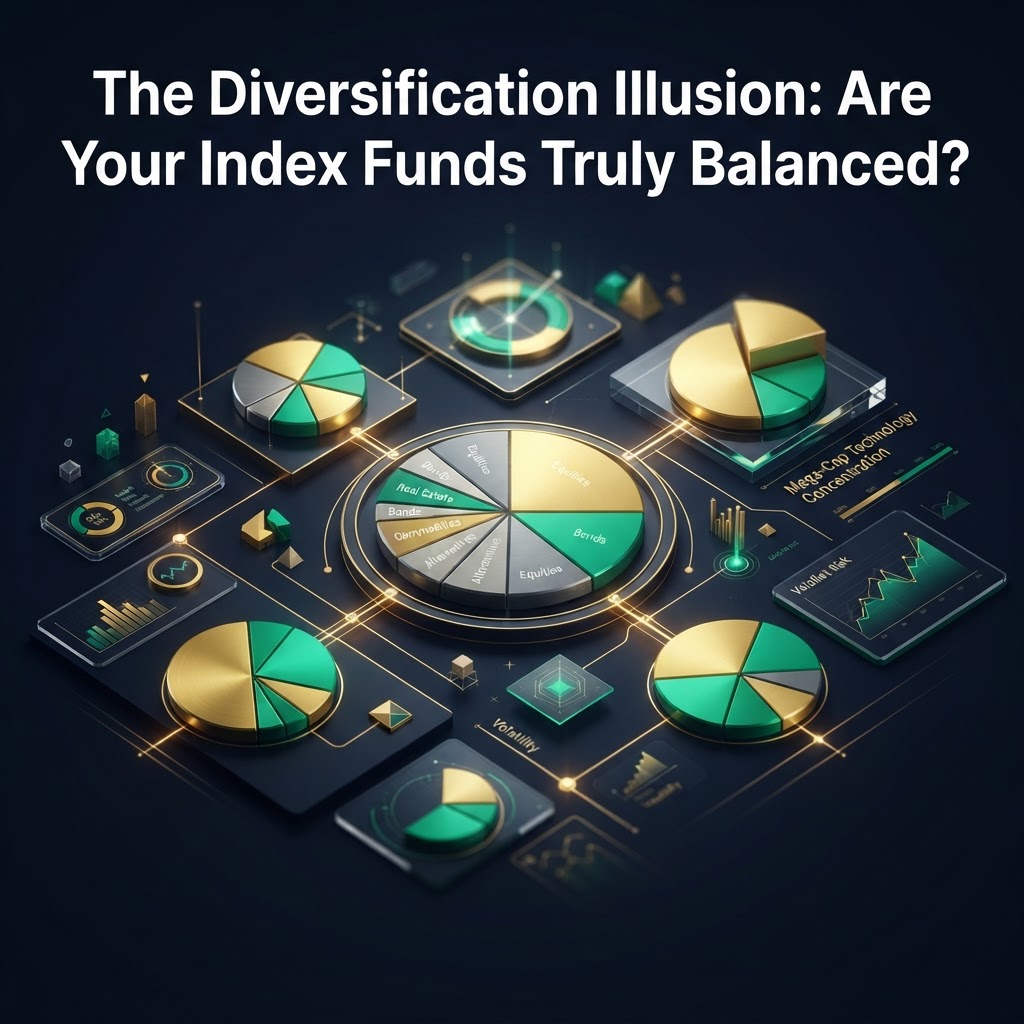
For decades, the bedrock of prudent investing has been the simple, automated efficiency of passive index funds. However, as we navigate the mid-year mark of 2026, a growing cohort of institutional analysts is raising alarm bells regarding what has become known as the diversification illusion. This phenomenon describes the deceptive sense of security investors feel when holding broad-market indices that, in reality, have become increasingly concentrated in a handful of mega-cap entities. While investors believe they own a diversified slice of the global economy, the mechanical feedback loops inherent in market-cap-weighted indexing often create a trap: you are not buying a broad basket of independent companies, but rather a concentrated bet on a narrow subset of the market.
The Mechanics of Concentration Risk
To understand the diversification illusion, one must first look at how passive funds operate. Most popular indices are market-capitalization-weighted, meaning the largest companies by valuation command the largest share of the index. This creates a reflexive, self-reinforcing mechanism: as a stock’s price rises, its weight in the index increases. This forces passive funds to purchase more shares of that company, further driving up the price and increasing its weight even more.
As of July 2026, this feedback loop has reached a historical extreme. The top ten holdings of the S&P 500 now account for a disproportionate percentage of total index returns. When a portfolio’s performance is anchored to such a small number of firms, the traditional benefits of diversification—namely, the reduction of non-systemic risk through uncorrelated assets—evaporate. If these market leaders face a sector-specific correction or a regulatory headwind, the "diversified" index fund offers little protection, as the concentration risk is systemic to the vehicle itself.
Beyond the Beta: Understanding Feedback Loops
The dangers of the diversification illusion are compounded by the sheer volume of assets currently managed by passive vehicles. When billions of dollars in retail and institutional capital are programmed to track these indices automatically, the market loses the nuance provided by active price discovery.
The Problem with Price-Agnostic Buying
Passive funds are inherently price-agnostic; they buy regardless of valuation, earnings health, or competitive moats. In a healthy market, investors sell overvalued assets, providing a check on runaway prices. In the current regime, the persistent inflow into passive funds acts as a continuous bid for the most expensive stocks, effectively decoupling price from intrinsic value. For the individual investor, this means that even if you own 500 companies, your portfolio’s volatility is almost entirely dependent on the performance of a dozen tech titans.
Systemic Fragility in 2026
The current market environment is characterized by high sensitivity to interest rate shifts and AI-driven capital expenditures. Because these top-heavy holdings often share similar macroeconomic sensitivities, the "diversification" within a standard index fund is effectively nullified. When correlations move toward 1.0 during a liquidity event, the protective layer that index funds are supposed to provide simply disappears, leaving portfolios exposed to a single, high-magnitude drawdown.
Practical Steps to Mitigate Concentration Risk
If your current asset allocation relies exclusively on broad-market index funds, you are likely carrying more concentration risk than your risk tolerance dictates. Here is how to regain control:
- Conduct a “Look-Through” Analysis: Use modern portfolio analytical tools to see your true exposure. You may find that while you hold five different ETFs, they all share the same top ten holdings, creating significant hidden overlap.
- Incorporate Alternative Beta or Equal-Weight Strategies: Consider rebalancing into equal-weighted indices. By granting each company the same weight, you force your portfolio to be less reliant on the performance of the largest mega-caps and gain better exposure to the mid-cap and value sectors of the economy.
- Introduce Low-Correlation Assets: Integrate assets that do not move in lockstep with the equity markets, such as managed futures, non-correlated hedge strategies, or real assets. These serve as a genuine hedge rather than an illusory one.
- Re-evaluate Active Management: The environment of 2026 favors alpha, not just beta. Selective, high-conviction active management—when properly vetted—can navigate around the overvalued mega-caps that currently dominate passive benchmarks.
Key Takeaways
- The Diversification Illusion: Investors are often mistaken in thinking that owning an index fund equals true diversification; in 2026, it often equates to extreme concentration in top-heavy market leaders.
- Mechanical Feedback Loops: Passive funds rely on market-cap weighting, which forces systematic buying of the most expensive assets, potentially inflating valuations and increasing risk.
- Systemic Fragility: Modern indices act as "herding" mechanisms, increasing volatility when correlations rise and reducing the stabilizing effect of holding truly diverse, uncorrelated assets.
- Strategic Rebalancing: Investors should look past the label of the fund and analyze their true holdings, potentially shifting toward equal-weighted strategies or incorporating alternative assets to dampen the impact of concentrated market movements.
Ready to Analyze Your Next Investment?
Get a free AI-powered fair value analysis on any stock. See intrinsic value, margin of safety, and institutional-grade risk metrics in seconds. No credit card required.
Want full access to our institutional research tools? Explore Invest Daily Pro.
You're learning technical analysis. See how AI reads a live chart right now.
Upload any stock chart or enter a ticker and our AI identifies key patterns, support/resistance levels, trend strength, and flags potential entry/exit zones.
Watch: Related Videos
from Invest DailyGet This Analysis in Your Inbox Every Morning
Get our daily market briefing with institutional-grade analysis, key developments, and actionable strategy - delivered before the opening bell.
Essential Reading: Top Investor Guides
Our most comprehensive guides - start here to build a complete investing foundation.
Market Basics
Stock Market Fundamentals: How Markets Work, Reading Charts, and Technical Analysis
Portfolio Strategy
Portfolio Management Masterclass: Asset Allocation, Diversification, and Rebalancing
Retirement
The Complete Retirement Planning Guide: 401(k), IRA, Roth, and FIRE Strategy
Dividend Income
The Ultimate Guide to Dividend Investing: How to Build a Safe Income Portfolio
Valuation
The Complete Guide to Stock Valuation: How to Calculate Intrinsic Value
Financial Statements
How to Read a Balance Sheet Like a Professional Analyst
Monetary Policy
Understanding the Federal Reserve: How Monetary Policy Actually Works
Real Estate
Real Estate Investment Trusts (REITs): A Complete Investor's Guide
Options & Hedging
Options Basics: How to Use Derivatives to Protect Your Portfolio
Investor Psychology